Code01-栈
洛谷 P2947

1
2
3
4
5
6
7
8
9
10
11
12
13
14
15
16
17
18
19
20
21
22
23
24
25
26
27
28
29
30
31
32
33
34
35
36
37
38
39
40
package luogu;

import java.util.ArrayDeque;
import java.util.Scanner;
import java.util.Stack;

public class P2947 {

	public static void main(String[] args) {
		int n = 0;
		Scanner scanner = new Scanner(System.in);
		n = scanner.nextInt();
		int h[] = new int[n+1];
		int l[] = new int[n+1];
		for(int i = 1;i<=n;i++) {
			h[i] = scanner.nextInt();
		}

		//Stack<Integer> s = new Stack<>();
		ArrayDeque<Integer> s = new ArrayDeque<>(); //效率高

		for(int j = n;j>=1;j--) {
			while(!s.isEmpty()&&h[j]>=h[s.peek()]) {
				s.pop();
			}
			if(s.isEmpty()) {
				l[j] = 0;
			}else {
				l[j] = s.peek();
			}
			s.push(j);
		}

		for(int i = 1;i<=n;i++) {
			System.out.printf("%d\n",l[i]);
		}
	}

}
思路:
单调栈,从输入数组的最后一个元素开始,把对应下标压入栈中;
当前元素大于等于栈顶元素时,弹出栈顶元素,直到小于栈顶元素或栈空为止;
栈空则当前元素无仰望,不空则其仰望为此时栈顶下标对应元素
注意:
ArrayDeque用时比Stack少,使用Stack有两个例子RE,换用后通过
POJ 1363
1
2
3
4
5
6
7
8
9
10
11
12
13
14
15
16
17
18
19
20
21
22
23
24
25
26
27
28
29
30
31
32
33
34
35
36
37
38
39
40
41
42
43
44
45
package POJ;

import java.util.ArrayDeque;
import java.util.Scanner;

public class POJ_1363 {

	public static void main(String[] args) {
		int n;
		int i,j;
		int mid;
		Scanner scanner = new Scanner(System.in);
		n = scanner.nextInt();
		while(n!=0) {
			int b[] = new int[n];
			b[0] = scanner.nextInt();
			ArrayDeque<Integer> s = new ArrayDeque<>();
			while(b[0]!=0) {
				for(i = 1;i<n;i++) {
					b[i] = scanner.nextInt();
				}
				i = j = 0;
				s.push(++i);
				while(i<=n&&j<n) { //i:顺序数组下标; j:输入数组下标
					if(s.isEmpty())s.push(++i);
					else{
						mid = s.peek();
						if(mid!=b[j])s.push(++i);
						else {
							s.pop();
							++j;
						}
					}
				}
				if(j>=n) {
					System.out.println("Yes");
				}else{
					System.out.println("No");
				}
				b[0] = scanner.nextInt();
			}
			n = scanner.nextInt();
		}
	}
}
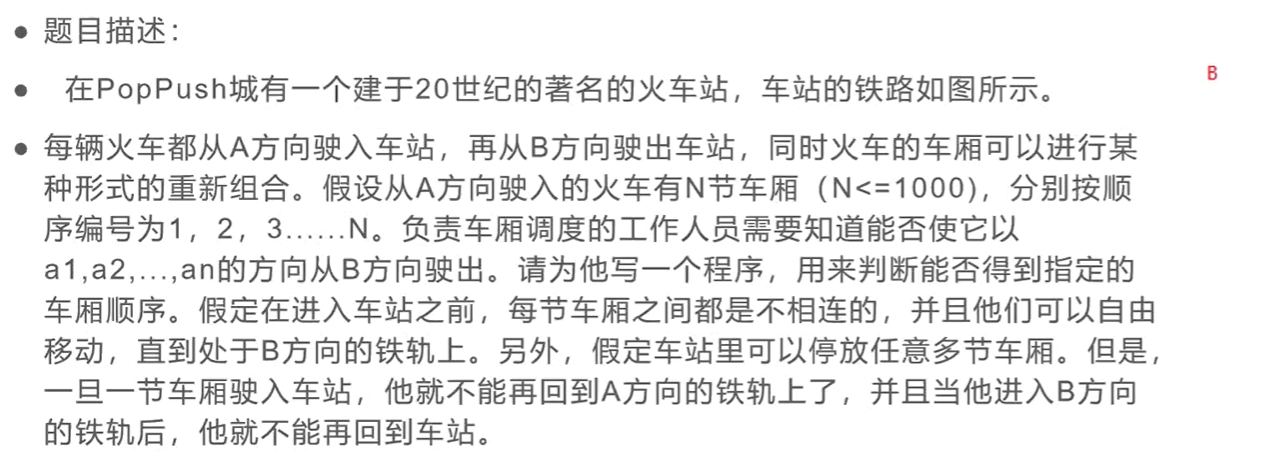
基本的栈问题,主要为输入格式的应对方法;
POJ 不支持ArrayDeque。
POJ 2106
1
2
3
4
5
6
7
8
9
10
11
12
13
14
15
16
17
18
19
20
21
22
23
24
25
26
27
28
29
30
31
32
33
34
35
36
37
38
39
40
41
42
43
44
45
46
47
48
49
50
51
52
53
54
55
56
57
58
59
60
61
62
63
64
65
66
67
68
69
70
71
72
73
74
75
76
77
78
79
80
81
82
83
84
85
86
87
88
89
90
91
92
93
94
95
96
97
98
99
100
101
102
103
104
105
106
107
108
109
110
111
112
113
114
115
116
117
118
119
120
121
122
123
124
125
126
127
128
129
130
131
132
133
134
135
136
137
138
139
140
141
142
143
144
145
146
147
148
149
150
151
152
153
154
155
156
157
158
159
160
161
162
163
164
165
package POJ;

import java.util.Scanner;

public class POJ_2106_02 {

	public static void main(String[] args) {
		Scanner scanner = new Scanner(System.in);

		int cnt = 0;
		while(scanner.hasNext()) {  //JAVA中:EOF结尾的处理方式
			ArrayStack numStack = new ArrayStack(1000);
			ArrayStack operStack = new ArrayStack(1000);

			int index = 0;
			int num1 = 0;
			int num2 = 0;
			int oper = 0;
			int res = 0;
			char ch = ' ';
			cnt ++;
			String expression = scanner.nextLine();
			while(true) {
				while(true) {
					ch = expression.substring(index,index+1).charAt(0);
					if(ch!=' ')break;
					index++;
					if(index >= expression.length())break;
				}
				if(operStack.isOper(ch)) {
					if(!operStack.isEmpty()) {
						if(ch == '!'||ch == '(') {  // 将取非符号直接压入符号栈,否则"!!F"为例,会出现取不出数字的情况
							operStack.push(ch);
						}
						else if(operStack.peek() == '('&&ch!=')') {
							operStack.push(ch);
						}else {
							if((ch!=')')&&(operStack.priority(ch)>operStack.priority(operStack.peek()))) {
								operStack.push(ch);
							}else {
								int mid = 0;
								if(ch != ')') {
									while(true) {  //符号栈弹出直到栈顶优先级小于当前符号优先级
										if(!operStack.isEmpty()&&(operStack.peek() == '('))break;
										if(operStack.isEmpty())break;
										if((operStack.priority(ch)>operStack.priority(operStack.peek())))break;
										mid = operStack.pop();
										num2 = numStack.pop();
										if(mid!='!')
											num1 = numStack.pop();
										res = numStack.cal(num1, num2, mid);
										numStack.push(res);
									}
									operStack.push(ch);
								}else {
									while(true){
										mid = operStack.pop();
										if(mid == '(')
											break;
										num2 = numStack.pop();
										if(mid != '!')
											num1 = numStack.pop();
										res = numStack.cal(num1, num2, mid);
										numStack.push(res);
									}
								}
							}
						}
					}else {
						operStack.push(ch);
					}
				}else {
					if(ch == 'V') {
						numStack.push(1);
					}else if(ch == 'F'){
						numStack.push(0);
					}
				}
				index++;
				if(index >= expression.length())
					break;
			}

			while(true) {
				if(operStack.isEmpty())
					break;
				oper = operStack.pop();
				num2 = numStack.pop();
				if(oper!='!')
					num1 = numStack.pop();
				res = numStack.cal(num1, num2, oper);
				numStack.push(res);
			}
			char r = ' ';
			int realRes = 0;
			realRes = numStack.pop();
			if(realRes == 1)r = 'V';
			else if(realRes == 0)r = 'F';
			System.out.printf("Expression %d: %c\n", cnt,r);
		}
	}

}

class ArrayStack{  //惯例不变
	private int maxSize;
	private int[] stack;
	private int top = -1;

	public ArrayStack(int maxSize) {
		this.maxSize = maxSize;
		stack = new int[this.maxSize];
	}

	public boolean isFull() {
		return top == maxSize - 1;
	}

	public boolean isEmpty() {
		return top == -1;
	}

	public void push(int value) {
		top++;
		stack[top] = value;
	}

	public int pop() {
		int value = stack[top];
		top --;
		return value;
	}

	public int peek() {
		return stack[top];
	}

	public int priority(int oper) {
		if(oper == '!')
			return 1;
		else if(oper == '&')
			return 0;
		else return -1;
	}

	public boolean isOper(char val) {
		return val == '!'||val == '&' ||val == '|'||val == '('||val == ')';
	}

	public int cal(int num1,int num2,int oper) {
		int res = 0;
		switch(oper) {
		case '&':
			res = ((num1 == 1)&&(num2 == 1))?1:0;
			break;
		case '|':
			res = ((num1 == 1)||(num2 == 1))?1:0;
			break;
		case '!':
			res = (num2 == 0)?1:0;
			break;
		}
		return res;
	}
}
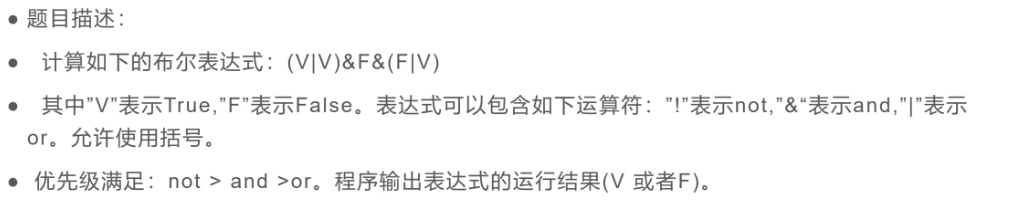
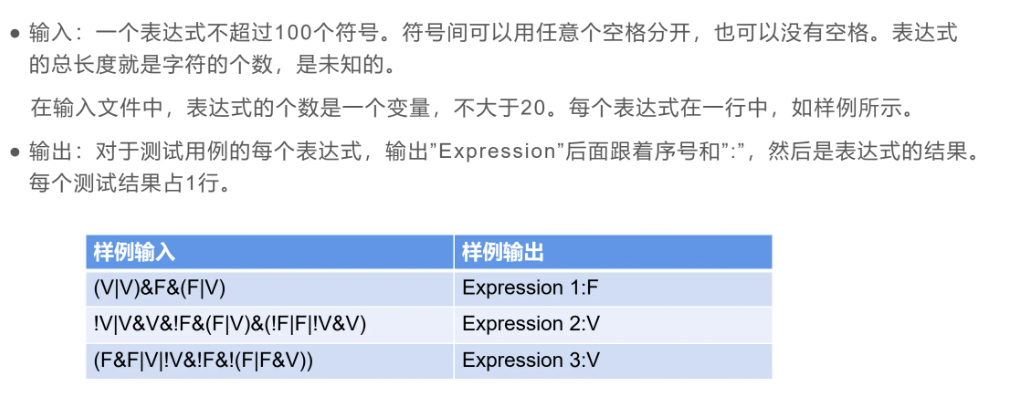
思路:
标准的引入括号的使用栈计算中缀表达式,在此基础上添加了单目运算符取非;
注意:
取非符号应直接压入到操作符栈;
引入括号后一些处理上的细节问题,例如:
- 判断是否为符号要加入左右括号;
- 比较运算符优先级大小时,遇到”(“要停止,要识别当前操作符不是”)”;
- 若当前操作符为”)”,则栈顶是”(“时不应直接入栈;
This post is licensed under CC BY 4.0 by the author.